Inside the Hanau Sports Campus: How KNX and a Single Touch Panel Keep a 30-Kilometre Smart Building Running
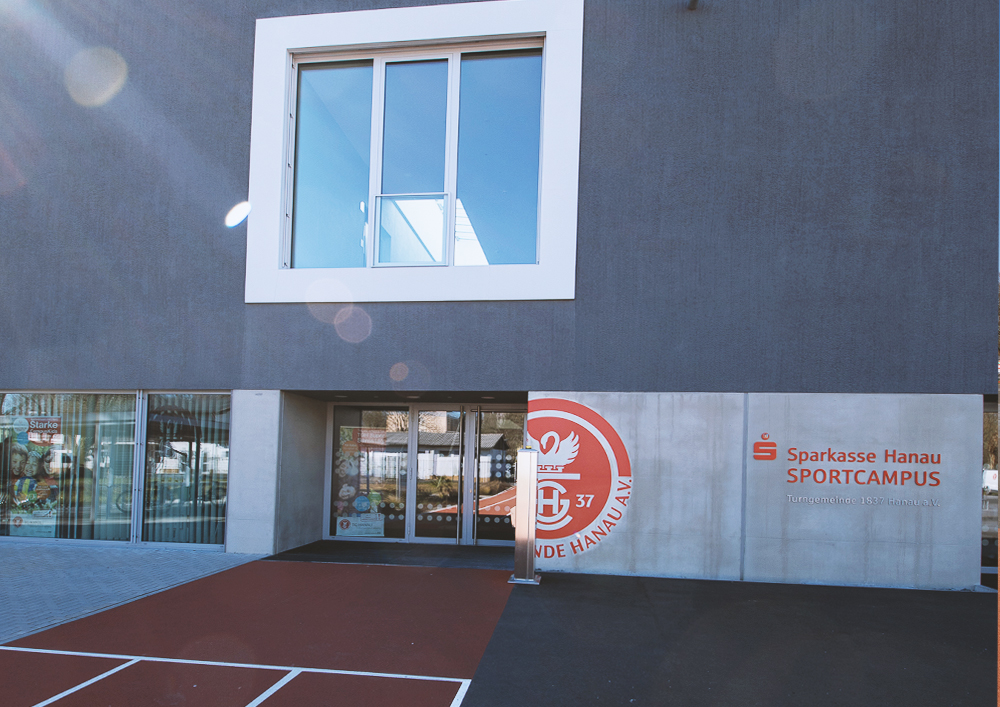
When the Turngemeinde 1837 Hanau set out to build a new sports campus in Germany, they weren’t just constructing a gym.
They were creating one of the most ambitious recreational and club sports facilities in the city’s history — a complex that would need to serve school classes, club members, athletes, and the general public, all under one roof and across acres of outdoor grounds.
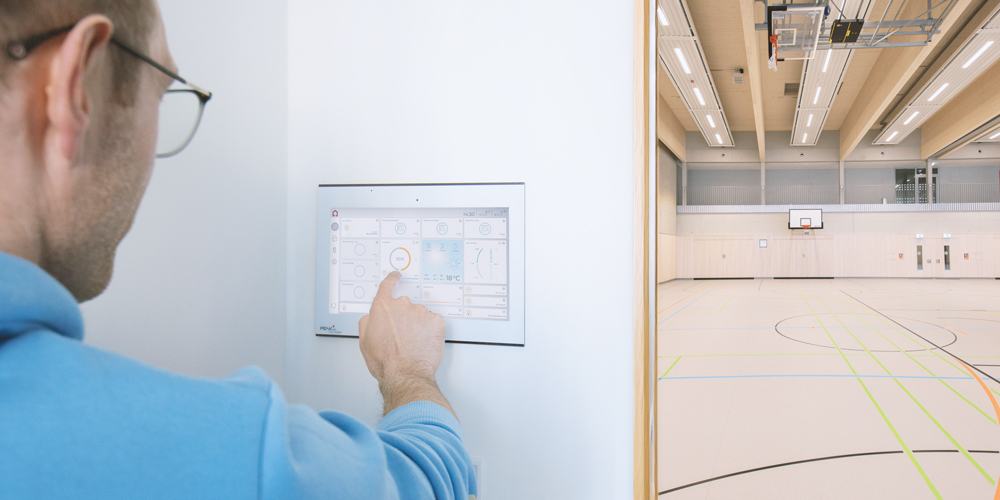
The result is a campus that’s as impressive in its engineering as it is in its architecture. And at the centre of it all sits something surprisingly simple: a single touch panel at the reception desk.
A Campus Built for Every Kind of Athlete
The new facility is anchored by a 45 x 55 metre triple sports hall with a double-sprung floor and retractable partition walls — allowing the space to transform from one large arena into three separate courts in minutes. Around it, modern studios and a bright cafeteria complete the indoor experience.
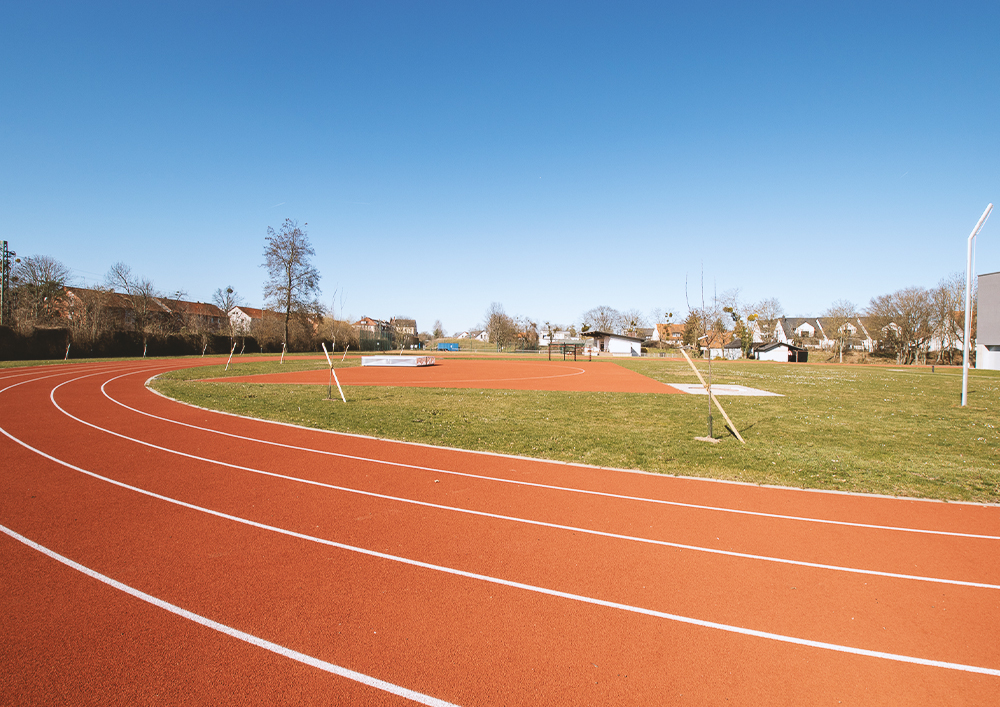
Outside, the ambition only grows. A 600-metre forest-floor running track winds through gentle hills, giving joggers a training environment that feels closer to nature than to a city sports centre. There’s also a 200-metre training track, a 110-metre sprint lane, and dedicated facilities for discus, hammer throw, shot put, long jump, and high jump. Archery, beach volleyball, and tennis round out the offering.
One Panel to Control It All
What makes this campus genuinely smart isn’t the number of devices — it’s how they’re managed. The entire building installation runs on KNX, the open standard for building automation, and the whole system is orchestrated through a single Controlmini touch panel (now known as the Control 12) paired with YOUVI visualisation software.
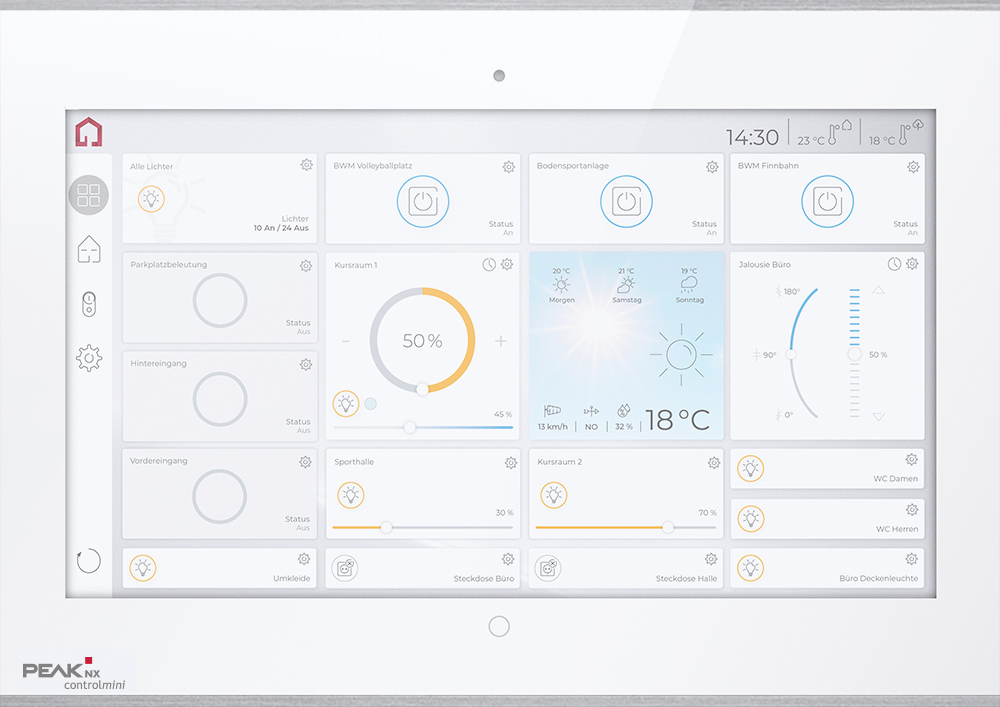
From the reception area, authorised staff can control lighting across the indoor spaces and outdoor tracks, adjust shading in training rooms, manage the parking barrier and roller gate, and monitor the underfloor heating — all from one interface. The outdoor lighting runs on time switches that adjust automatically based on daylight, and central commands ensure lights switch off in the evening when the building empties out.
Why 30 Kilometres of Cable Matters
To connect everything, the project required 30,000 metres of KNX cabling — roughly 5 kilometres outdoors and 25 kilometres inside the building. That’s not just a technical detail; it’s a statement about scale. This is a system designed to grow, adapt, and remain manageable for years.
The installation was carried out by Elektro Essel GmbH & Co. KG, a system integrator with prior experience using the same touch panels on projects like the Mathildenhöhe in Darmstadt. According to their team, the setup went smoothly — buttons, rooms, and switching functions were generated automatically through ETS import, and any minor issues were resolved quickly with support from the PEAKnx team.
Designed for People, Not Just Technology
What stands out most in this project is the emphasis on usability. With such a diverse group of users — from schoolchildren to club athletes to TG Hanau’s 4,000 members — simplicity wasn’t optional. As the Elektro Essel team puts it: “With YOUVI, we can present all the key functions clearly and tailor them precisely to TG Hanau’s requirements.”
That philosophy extends to support as well. Per the City of Hanau’s requirements, remote access was deliberately avoided. Instead, Elektro Essel provides on-site assistance whenever technical questions arise — a deliberate choice that keeps the human element in a highly automated building.
A Flagship Project with a Bigger Purpose
With a total investment of around €16 million, funded by the city, district, state, and federal government, the Hanau Sports Campus is about more than sport. It’s a public asset designed for maximum versatility — school sports in the morning, club training in the afternoon, public events in the evening — and its KNX-based control system adapts effortlessly to each scenario.
It’s a reminder that smart buildings aren’t just about technology. They’re about creating spaces that work for the people inside them — and occasionally, about making a single touch panel do the work of an entire facilities team.
Source: PEAKnx Official Website