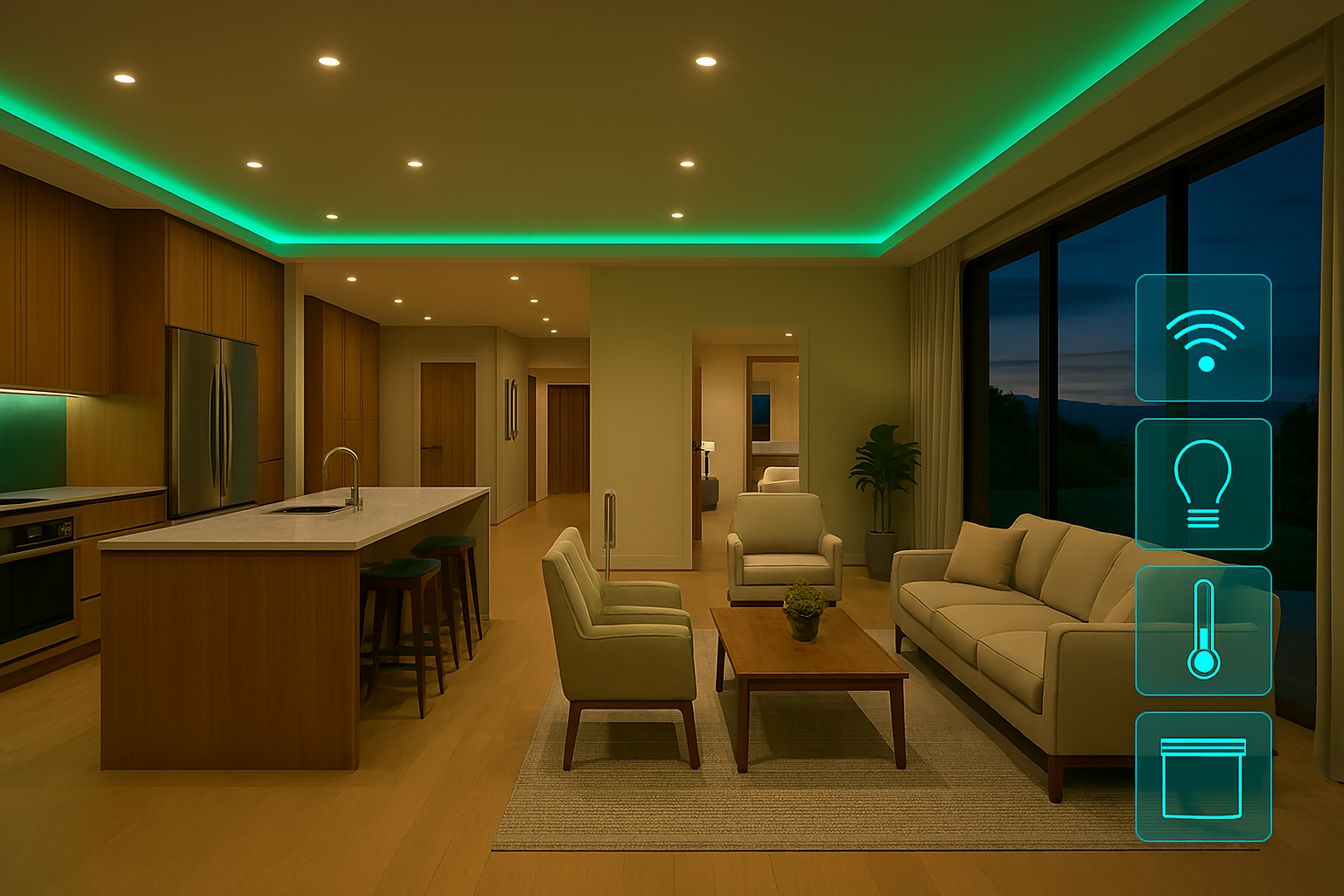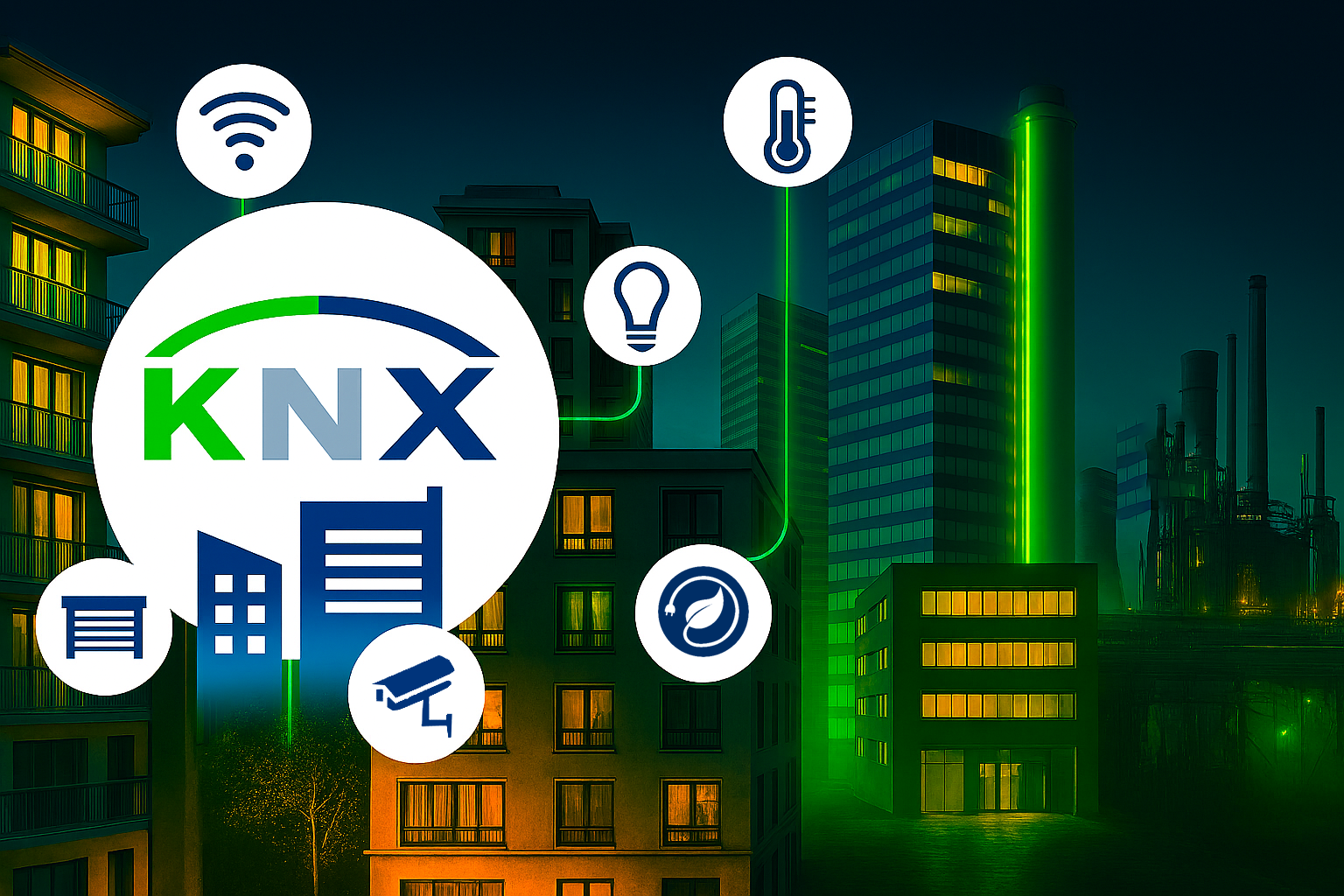
The KNX Association is recognized worldwide as a leading authority in standardizing smart home and building systems. With more than three decades of experience, it has established an open, manufacturer-independent protocol that enables interoperability among products from hundreds of different companies.
The KNX Association was founded in 1990 in Brussels, Belgium, with the aim of promoting smart homes and buildings and introducing the European Installation Bus system. This article introduces the history, goals, international activities, and key benefits of the KNX system.
Introducing the KNX Association: The Birth of a Global Standard
The KNX Association was founded in 1990 in Brussels, Belgium, under the name EIB Association, with the goal of promoting smart homes and buildings and, in particular, developing and introducing the European Installation Bus system. The association was the result of collaboration among several leading European manufacturers.
A major milestone in its history came in 1999, when it merged with two other reputable European associations: BCI in France (supporting the Batibus system) and the European Home Systems Association in the Netherlands (supporting the EHS system).
This strategic merger led to the creation of a single, powerful standard, and the association was renamed the KNX Association. The ultimate goal of the merger was to create a truly open standard under the name KNX.
The key objectives of the KNX Association, from its inception to the present, are:
- Defining a single, open standard for building automation
- Establishing the KNX logo as a symbol of quality and interoperability (Interworking) among products from different manufacturers
- Establishing KNX as an international standard recognized by European and global standardization bodies
Since the EIB standard is backward-compatible with KNX, many devices can carry both the KNX and EIB logos simultaneously.

International Activities of the KNX Association
To achieve its goals, the KNX Association carries out extensive activities at the international level, the most important of which are outlined below:
A) Technical Development and Standard Promotion
The association continuously works with its members (manufacturing companies) to develop and improve the KNX standard and to promote it worldwide.
B) ETS Software Development
ETS is the common, manufacturer-independent software for designing, configuring, and commissioning all KNX devices. Developing and supporting this software is one of the association’s most central activities.
C) Certification and the KNX Logo
Through rigorous testing procedures on manufacturers’ products, the association grants the KNX logo to compliant products. This logo guarantees the product’s quality and its interoperability with all products bearing the KNX logo.
D) Training and Certification
By providing educational documentation and certifying accredited training centers around the world, the association trains skilled professionals and standardizes technical knowledge in this field.
E) International Standardization
One of the association’s most significant achievements is the recognition of the KNX standard by reputable international bodies:
- CENELEC (2003): Recognized as a European standard (EN 50090) for electronic home and building systems.
- ISO/IEC (2006): Recognized as an international standard (ISO/IEC 14543-3).
- Chinese National Standard (GB/T 20965) (2013).
- ASHRAE (ANSI/ASHRAE 135): Approved by the American Society of Heating and Ventilation Engineers.
From its 9 founding members, the KNX Association now hosts more than 500 member companies from around the world, reflecting the industry’s broad adoption of this standard.
F) Developer Support
The association provides technical support and consultation for companies intending to develop KNX-compatible products.
G) Promotional Activities
Participation in international exhibitions, publication of brochures, website launches, and other marketing measures to showcase the capabilities of the KNX system.
Key Benefits of the KNX System
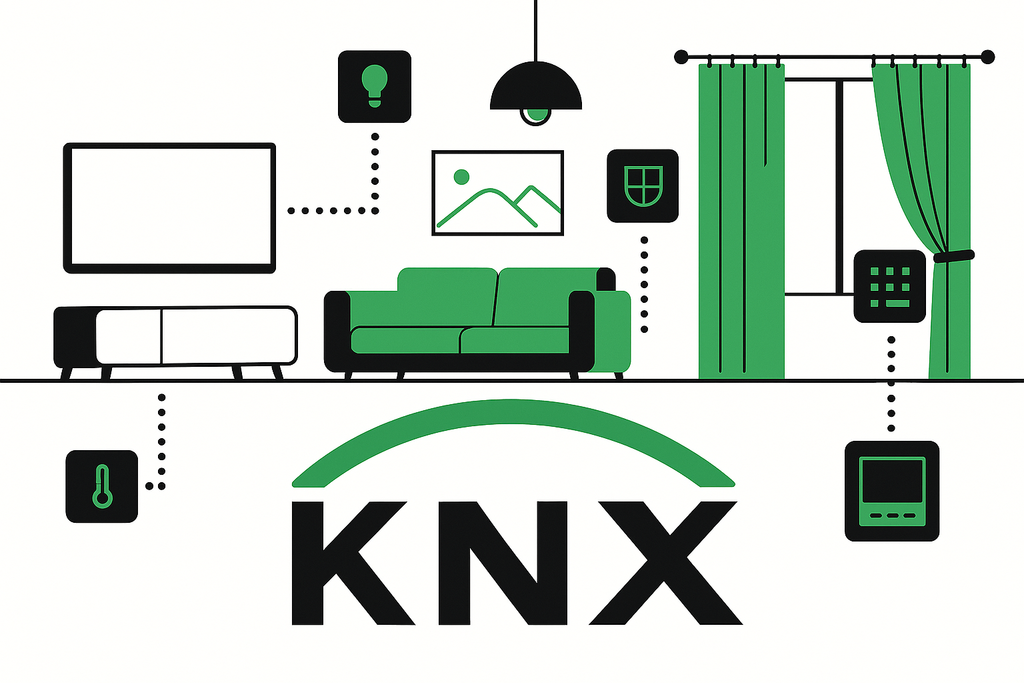
The KNX standard brings numerous benefits to residential, commercial, and industrial buildings, distinguishing it from traditional systems:
1. Enhanced Safety
- Implementation of safety scenarios such as presence simulation during unoccupied periods
- Integration with fire alarm and fire suppression systems
- Central control and monitoring of all equipment
2. Significant Energy Savings
- Intelligent control of lighting, heating, cooling, and HVAC systems based on presence, natural light, and time
- Automatic shutdown of high-consumption equipment
- Energy consumption reporting
- Savings of up to 75% in lighting energy and more than 30% in heating and cooling energy
3. High Flexibility and Adaptability
- Easy modification of building functions without rewiring (only by changing parameters in the software)
- Ability to add or remove new equipment in the future without disrupting the existing system
- Adaptability to changing user needs
4. Greater Comfort and Convenience
- Unified and simple control of all equipment through a single user interface such as a touch screen, remote control, or mobile phone
- Ability to define advanced scenarios such as a “home cinema scenario” that simultaneously controls lighting, blinds, and audiovisual systems
- Remote control via the internet or telephone
5. Future-Proofing
- Based on an open, globally accepted standard
- Manufacturer-independent: users have complete freedom to choose products from different brands
- Scalability from a small apartment to a very large office tower
6. Wide Product Range
- Access to thousands of certified products from hundreds of different manufacturers for all applications
7. Extensive Service Network
- Certified designers, integrators, and contractors available worldwide
Conclusion
By creating an open, standardized, and interoperability-based ecosystem, the KNX Association has revolutionized the smart building industry. Its extensive international activities—from technical development to standardization and training—have laid solid foundations for the global adoption of this technology. The countless benefits of the KNX system, from energy savings and enhanced safety to unmatched flexibility, make it a logical and future-proof choice for any type of building. KNX is not merely a protocol; it is an international standard that is shaping the future of smart buildings.
To access more specialized educational articles in this field, you can visit the Smart Technology category and explore further content.